The distinction between consumer-grade and professional additive manufacturing equipment has intensified entering 2026. For businesses, dental practices, and engineering firms across Europe and North America, reliance on machines that exhibit premature failure is unsustainable. The imperative for sustained productivity necessitates the implementation of a dedicated professional 3D printer.
The selection process for professional equipment demands meticulous scrutiny, moving beyond superficial metrics such as print speed. Whether the objective is chairside surgical guide fabrication or high-temperature industrial prototyping, the criteria defining the best professional 3d printer are centered on reliability and integration.
This comprehensive guide evaluates the seven leading candidates for 2026. Furthermore, it addresses the critical component often overlooked: the essential ecosystem required to transform high-end hardware into a predictable, professional workflow.
Defining the Modern Professional 3D Printer in 2026
The designation of "professional" status is not merely predicated on cost. While consumer units are capable of producing satisfactory results, a professional 3D printer fundamentally provides a superior level of operational certainty.
Reliability vs. Tinkering: The Core Difference
Whereas enthusiasts may regard routine calibration and maintenance as engagement, professionals perceive such downtime as a quantifiable loss of revenue. Consequently, the performance of a true professional 3D printer is characterized by its high degree of reliability and autonomy. Key features include:
-
Automated Calibration: Standardized integration of Lidar scanning and automated bed leveling processes.
-
Redundancy: Implementation of robust filament monitoring and reliable power-loss recovery mechanisms.
-
Support: Access to dedicated, timely technical assistance and robust warranty coverage.
Material Compatibility and Ecosystems
A premium machine must facilitate access to advanced materials, extending capabilities beyond common thermoplastics. The best professional 3d printer enables specialized production:
-
Industrial Applications: Handling composites such as Carbon Fiber, Nylon, Polycarbonate, and PEEK, which necessitate high extrusion temperatures and specialized nozzles.
-
Clinical Applications: Certification for use with (Class IIa) biocompatible resins, essential for procedures involving long-term patient contact.
Top Contenders: The 7 Best Professional 3D Printers for 2026
This selection represents the machines demonstrating superior reliability, output quality, and market support entering the 2026.
The Titans of FDM: Engineering Grade Workhorses
Fused Deposition Modeling (FDM) technology remains the standard for robust, functional parts requiring high mechanical integrity.
-
Bambu Lab X1E: This machine continues to exert significant market influence by successfully integrating industrial features—such as an actively heated chamber and secure Ethernet connectivity—into a compact system, facilitating the rapid production of engineering-grade components.
-
Ultimaker S7: Recognized for its established reliability, the Ultimaker ecosystem remains a benchmark. Its proprietary dual-extrusion capability supports the use of water-soluble PVA supports, which is crucial for manufacturing complex internal geometries.
-
Raise3D Pro3 Series: Distinguished by its substantial build volume and high-efficiency dual-extrusion system. This machine is optimally suited for manufacturing large production jigs or full-scale prototypes, solidifying its position among the best professional 3d printer options for large-format needs.
The Masters of Resin: Precision for Dentistry and Jewelry
Stereolithography (SLA) and Digital Light Processing (DLP) technologies are indispensable when achieving microscopic detail and exceptional surface finish is paramount.
-
Formlabs Form 4: Formlabs retains its market leadership in the professional desktop segment. Its advanced Low Force Display technology and self-contained resin cartridges promote clean and consistent operation, affirming its status as a gold standard, particularly in dental laboratory settings in 2026.
-
Uniformation GKTwo: A notable competitor known for its integrated thermal control. The heated resin vat is critical for maintaining consistent material viscosity, thereby ensuring reliable printing with 12K resolution accuracy.
-
SprintRay Pro 95 S: This system is specifically engineered for clinical dentistry. Its high speed and proven accuracy enable seamless integration with intraoral scanning technology, directly supporting streamlined chairside applications.
-
Phrozen Sonic Mega 8K S: Dedicated to high-volume production. The expansive build plate capacity renders this unit highly effective for batch manufacturing requirements, such as producing multiple dental arches or complex assemblies in a single operational cycle.
Expert Insight: For independent verification of dimensional accuracy and material stress testing across these models, authoritative technical resources such as All3DP provide comprehensive benchmarks.
Based on reliability, output quality, and market reputation entering 2026, here are the heavy hitters you should consider.
Why Environment Matters More Than the Machine
A pivotal truth in professional 3D printing often receives insufficient attention: the hardware constitutes only half of the functional equation.
Acquiring the best professional 3d printer available does not negate environmental variables. Placement within a compromised environment, subject to drafts or excessive dust will inevitably lead to print failure and diminished part quality. Professional results mandate a controlled, professional environment. This is the domain where UFM Design provides critical infrastructure solutions.
Temperature Stability: The Key to Engineering Materials
The successful utilization of engineering-grade materials such as ABS, ASA, or Nylon is highly dependent on thermal consistency. Any temperature variation, such as an air current within the workspace, can induce warping and delamination of the print.
While certain professional machines incorporate heated chambers, many high-performance units require external stabilization.
-
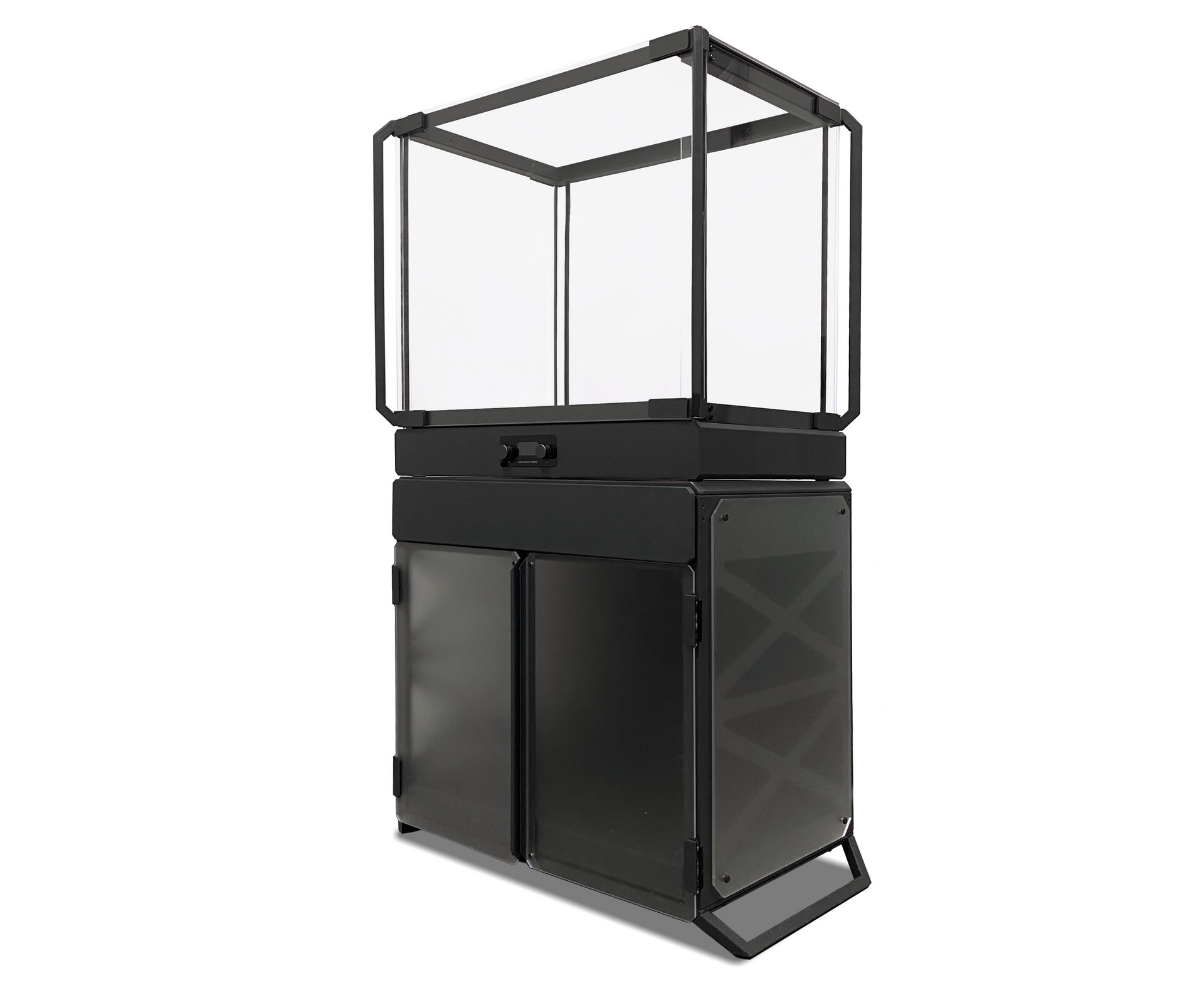
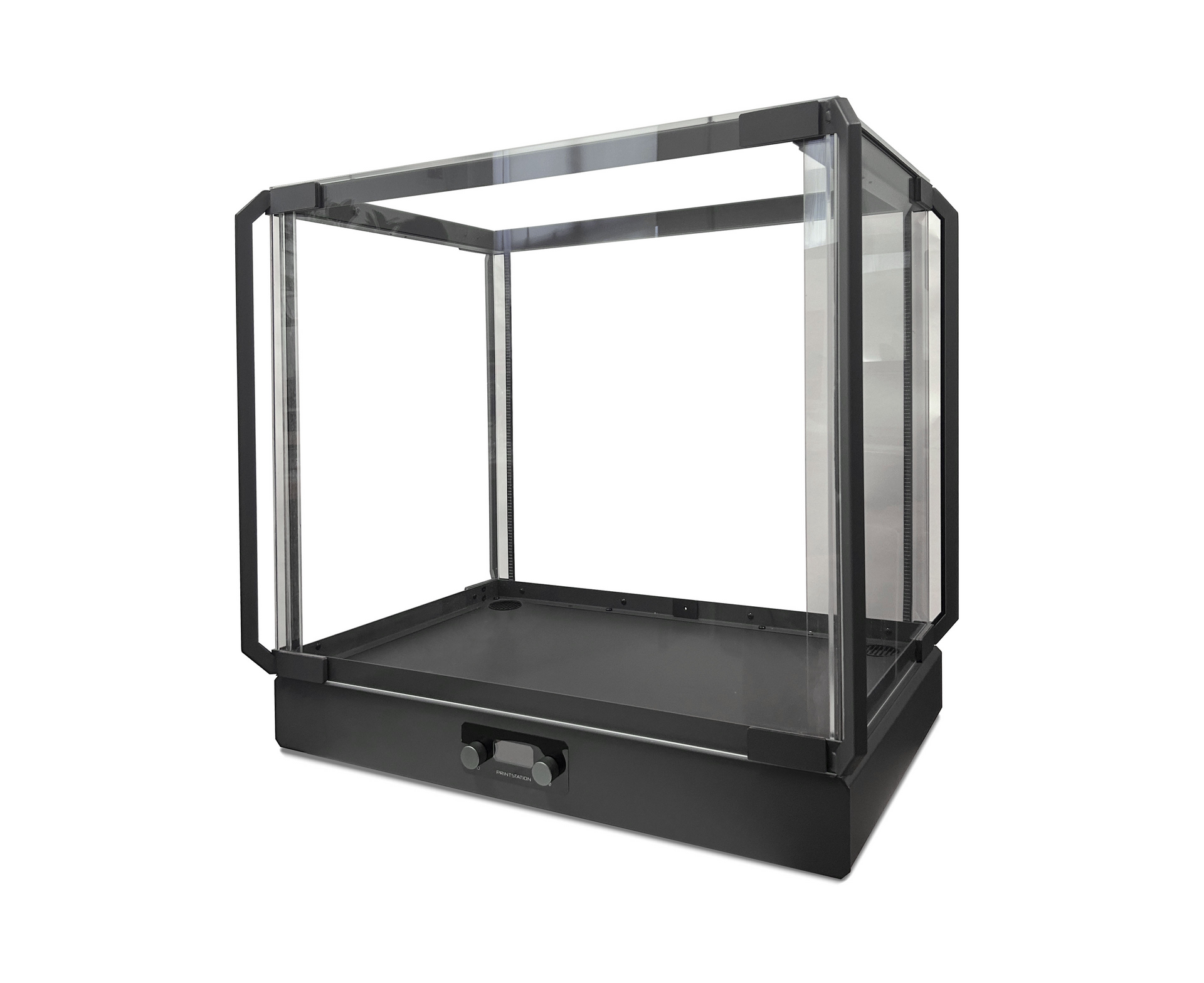
The Solution: Implementation of a dedicated PrintStation Enclosures ensures a stable thermal environment. This containment mechanism mitigates heat loss, prevents warping, and establishes the required conditions for high-performance material processing.
Safety First: Fume Extraction and Air Quality
All professional FDM and resin processes generate Volatile Organic Compounds (VOCs) and ultrafine particles. Managing these airborne contaminants is paramount for compliance and occupational health in any clinical or production environment. A truly professional 3D printer setup must integrate robust health safeguards.
-
The Solution: UFM Design enclosures are equipped with high-efficiency particulate air (HEPA) and carbon filtration options. Furthermore, during the critical post-processing phase, the use of a specialized SwiftBuilder MKII Resin Vacuum ensures hazardous particles are captured at the source, preventing their recirculation into the breathable atmosphere.
The Dental Professional's Corner: Speed and Compliance
For dental practitioners and orthodontic specialists, the criteria for selecting a professional 3D printer are heavily influenced by regulatory compliance and patient-facing efficiency.
Chairside Production with a Professional 3D Printer
The modern dental practice in 2026 has increasingly adopted "Same-Day Dentistry" protocols. This capability mandates rapid iteration—scanning, designing, and printing a night guard or surgical guide during a single patient visit.
-
Time Sensitivity: The selected printer must produce dimensionally accurate models within a 20-minute window.
-
Accuracy: Clinical applications, such as implant guides, require exacting precision that tolerates zero error.
Maintaining a Sterile and Clean Lab Environment
In clinical settings, contamination control is a paramount concern. The inherent byproducts of 3D printing—liquid resin residue and dust—must be strictly managed to prevent cross-contamination with sterile zones.
To maintain professional standards, an organized workflow is essential.
-
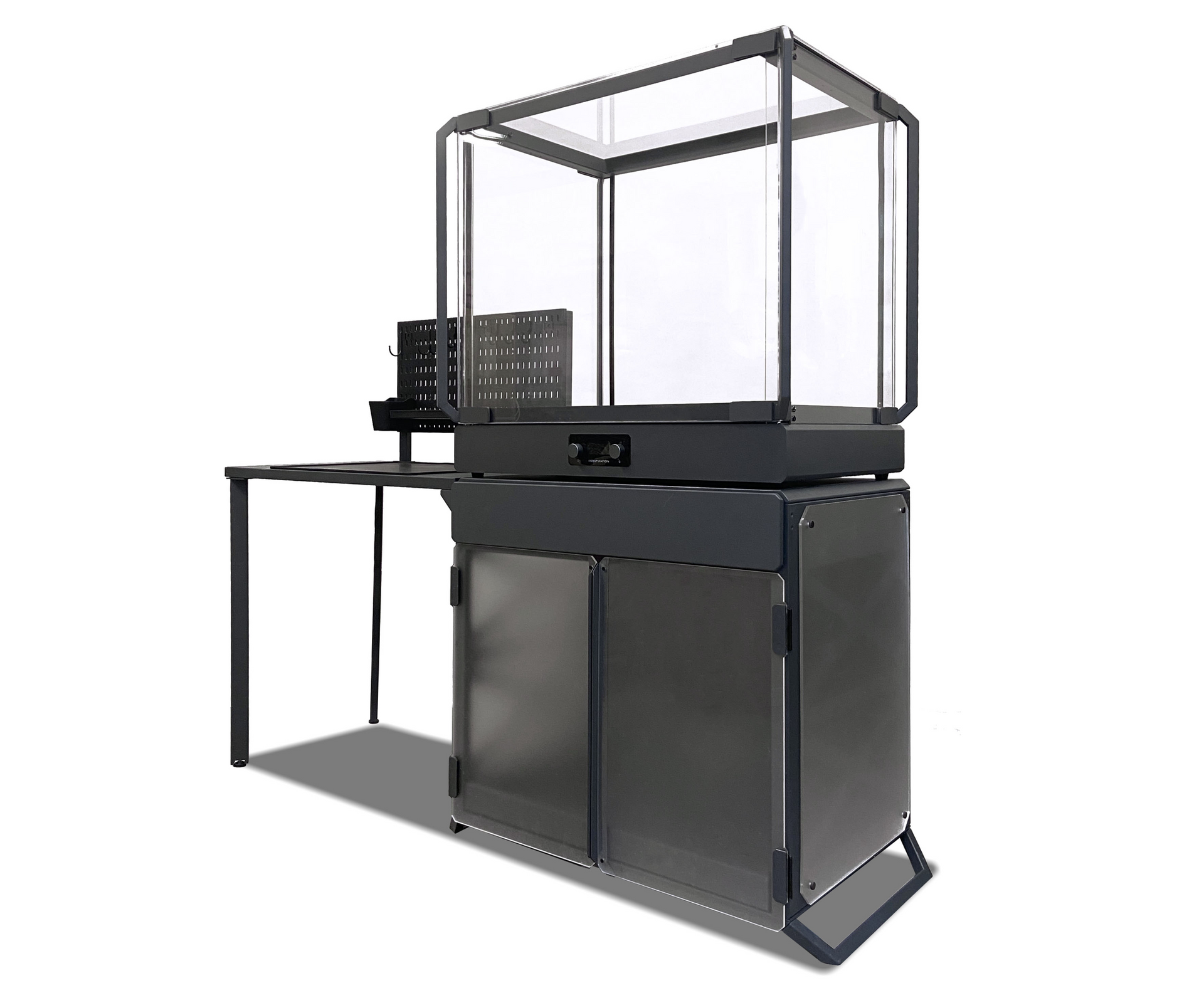
Workstation Organization: Dedicated PrintStation Workstation Desk are designed to define a designated processing zone, effectively separating printer, wash, and cure units from sterile clinical areas.
-
Post-Processing Hygiene: The removal and finishing of supports generate fine particulate matter. Using conventional vacuum systems is often insufficient for medical environments. Specialized equipment such as SwiftBuilder MKII Resin Vacuum is required to extract these fine particulate matter.
Frequently Asked Questions About Professional 3D Printers
Q: What is the difference between a hobbyist and a professional 3D printer?
A: Reliability and ecosystem. A professional 3D printer is designed to run 24/7 with minimal failure rates and is supported by a customer service team. It also typically supports advanced, high-temperature, or biocompatible materials.
Q: How much does the best professional 3d printer cost?
A: Prices vary wildly. A prosumer entry-level unit might start at $1,500, while a specialized dental or industrial machine can range from $3,500 to $10,000.
Q: Do I need a special room for a professional 3D printer?
A: Ideally, yes, due to noise and fumes. However, if you use a high-quality PrintStation Enclosure with filtration, you can safely operate these machines in a standard office environment.
Q: Can a professional 3D printer print metal?
A: Generally, no. True metal printing (DMLS) costs upwards of $100,000. However, some professional FDM printers can print "Metal-infused" filament which can be sintered in a furnace to create metal parts.
Summary: Build a Workflow, Not Just a Printer
The selection of a professional 3D printer is indisputably a critical investment for 2026. However, the hardware represents only a single element of a successful professional endeavor. Whether the choice is an engineering FDM unit or a dental SLA system, the consistent quality of the output is entirely dependent upon the integrity of the operating environment.
Achieving reproducible, clinically compliant, and professional results necessitates strict control over temperature stability, particulate management, and post-processing hygiene.
Ensure that your workspace infrastructure is commensurate with your premium equipment.
-
For Thermal and Fume Control: Implement the PrintStation Enclosure.
-
For Particulate Safety: Deploy the SwiftBuilder MKII Resin Vacuum.
-
For Operational Stability: Utilize dedicated PrintStation Workstation Desk.
Visit the UFM SHOP today to explore the full range of accessories and tools that substantiate a professional workspace.